Saturday, February 12, 2011
For the aspiring forensic scientists...
We have learnt from all the police/detective shows that we see so much of on television that fingerprints are important evidence to collect from the crime scene. Fingerprints are left behind on everything that we touch due to the sweat on the skin as well as the oil, dirts and salts that are lodged in the tiny ridges of our fingertips. One of the simplest methods to get samples of fingerprints is to dust the touched area with magnesium powder, then "lift" the prints by photographing them.
Up to now, fingerprints can only be obtained from smooth and hard surfaces such as plastic and glass. Recently, forensic experts from the University of Abertay Dundee and the Scottish Police Services Authority (SPSA) have developed a method of getting fingerprints from cloth. This is accomplished using a technique called vacuum metal deposition. The cloth is first placed in a vacuum and then coated with a layer of gold. Zinc is then introduced and it will adhere to gold at places which have not experienced any contact by human hands. In this way, the scientists will be able to see the fingerprints as areas that are not covered by the grey film of zinc.
While it is still difficult to obtain clear enough fingerprints from fabrics for identification purposes, this technique provides evidence that can help the police to deduce the order of events that occurred at the crime scene. For example, they can now find out whether a person has been pushed down a building from the back by looking for handprints on the back of the shirt that he/she was wearing when it happened. New materials for CSI~
Monday, February 7, 2011
Carcinogenic Benzene
In the lecture this morning, it was mentioned that benzene is a carcinogenic compound, which causes people who are exposed to it for long periods of time to develop cancer. The carcinogenic property of benzene was only conclusively recognised a few decades ago. I remember one of my lecturers in university telling us that chemists of the past used to use benzene to wash their hands after handling organic experiments.
Here is quite an old video about how a worker developed leukaemia after being exposed to benzene on his job.
Sunday, February 6, 2011
Help!!! I don't understand hybridization!
I know that some people will panic every time we talk about hybridization. It is one of those things that, at this stage, you need to just take for granted and not question too much, because you are not taught quite enough to comprehend the theory fully.
Here are some videos that may help you to visualise what hybridisation is about and hopefully, you will be able to understand it better.
This video was shown during the lecture
This video is rather clear in explaining how sp3 hybridisation occurs. A little long-winded at the beginning but have patience and watch it to the end as the second half of the video is good.
And here is the video for sp2 hybridisation. Similarly, watch it to the end!
Saturday, January 15, 2011
World's Smallest Periodic Table
A Chemistry Professor at the University of Nottingham in U.K. received a super cool (in the most geeky way) present for his birthday -- the Periodic Table etched on a strand of his own hair. This was done for Professor Martyn Poliakoff by the nanotechnlogists of the university. This is what it looks like:
The 118 elements of the Periodic were carved using a beam of gallium ions. This technique is usually utilised to do repair works on extremely small components of semi-conductors. So, how small is this Periodic Table? Each letter carved has a height of four microns -- that is 4 × 10⁻⁶ m. The entire Periodic Table is 88 microns wide, and 46 microns tall. If this were to be done on a Post-it note, almost one million of them can be fitted on a single piece of the note paper.
A video was made to show how the process was carried out. Check it out here:
Monday, January 10, 2011
Counterfeit eggs in China
If you have read the Straits Times a few days ago, you would have seen a report on how some people in China are using chemicals to make counterfeit eggs. These fake eggs look exactly like the real ones and the total cost of making each of them is only one-tenth the price of a real egg. These are the steps to make a fake egg:
The process used to create the spherical yolk and egg white is actually a technique commonly used in molecular gastronomy to make little spheres which are liquid in the centre, and have a thin jelly layer outside. I have tried this item of molecular gastronomy, and saw the chefs making the spheres with mango juice. What the chefs do is to dissolve some sodium alginate (or what is known as sodium alga acid in the flowchart given above) in fruit juice, then drip drops of the mixture into a solution of calcium ions. The calcium ions will react with the alginate to form a thin membrane, enveloping the fruit juice in it and forming a small ball. This is the exact reaction the counterfeiter in the video carried out when he was swirling the orange sphere around in the colourless liquid in the mould. While chemicals such as sodium alginate and calcium chloride are not harmful to the human body, I can't say the same about some of the rest of the chemicals the counterfeiters use to make the eggs.
And a video to show the actual process:
The process used to create the spherical yolk and egg white is actually a technique commonly used in molecular gastronomy to make little spheres which are liquid in the centre, and have a thin jelly layer outside. I have tried this item of molecular gastronomy, and saw the chefs making the spheres with mango juice. What the chefs do is to dissolve some sodium alginate (or what is known as sodium alga acid in the flowchart given above) in fruit juice, then drip drops of the mixture into a solution of calcium ions. The calcium ions will react with the alginate to form a thin membrane, enveloping the fruit juice in it and forming a small ball. This is the exact reaction the counterfeiter in the video carried out when he was swirling the orange sphere around in the colourless liquid in the mould. While chemicals such as sodium alginate and calcium chloride are not harmful to the human body, I can't say the same about some of the rest of the chemicals the counterfeiters use to make the eggs.
Sunday, August 1, 2010
Fritz Haber -- great or evil?
These two weeks, we have been studying about systems known as chemical equilibria. One of the most important chemical equilibrium reactions in the world is the Haber Process, which is the reaction between nitrogen and hydrogen gas, to form ammonia: N2 + H2 --> NH3.
This is an important process as it produces ammonia, which is an important starting material for the production of fertilizers. With the Haber Process, the world is no longer reliant on natural deposits for nitrogen-containing compounds. Nitrogen, which is the main component of air, can now be harnessed to produce the nitrates and nitrites required to manufacture fertilizers. At the present, 100 million tons of nitrogen fertilizer is being produced yearly through this process and this amount of fertilizer is responsible for feeding one third of the world's population.
So who was the chemist behind this amazing innovation that changed how the world feeds? He is a German chemist, named Fritz Haber. When he was at the University of Karlsruhe from 1894 to 1911, he worked with another chemist, Carl Borsch to develop the Haber Process. In 1918, both scientists won the Nobel Prize in Chemistry for their innovation.
While the Haber Process aided humanity by enabling mankind to produce fertilizers easily, leading to an increase in food production, the ammonia produced is also highly sought after for the production of explosives. With this technology, Germany was able to easily produce the ammunition required for the first World War, which extended their path to surrender, and prolonged the suffering of the parties involved in the war.
On top of contributing to WWI by providing his country with the means to produce explosives, Fritz Haber also played a major role in developing chemical warfare for the war. He developed chlorine gas to be used to poison the opponent forces and was even present at the war zone to release the gases on the soldiers. When exposed to chlorine gas at a high concentration, the gas will react with the water in one's lungs to form hydrochloric acid. This will cause the sacs in the lungs to break down, causing the lungs to be flooded. In other words, one is drowned internally by the moisture present in one's lungs.
Fritz Haber was proud of his contributions as a chemist to the war, but his wife, who was also a chemist, opposed his work on poison gas. She committed suicide on the day Haber left to oversee the release of poison gas on the Russian to demonstrate her stand.
Despite Haber's contributions to Germany during the first World War, he had to leave Germany in 1933 as he was Jewish. He moved to England and finally passed away due to heart failure in the Middle East.
The Haber Process helped to save the world from wide-spread hunger, but at the same time, provided man with the avenue to produce explosives easily. Such is an example of how Science can sometimes be a double-edged sword.
Thursday, July 29, 2010
The Science in Inception
I formally declare: Inception is now my new favourite movie. I love the whole concept of intruding dreams, bending reality and manipulating situations. Here is an article from New Scientist that discusses some of the neuroscientific concepts on which the movie is based.
If you haven't watched the movie, go watch it over the weekend if you have finished studying for your Lecture Test!
Sunday, July 25, 2010
Buckyballs in space!
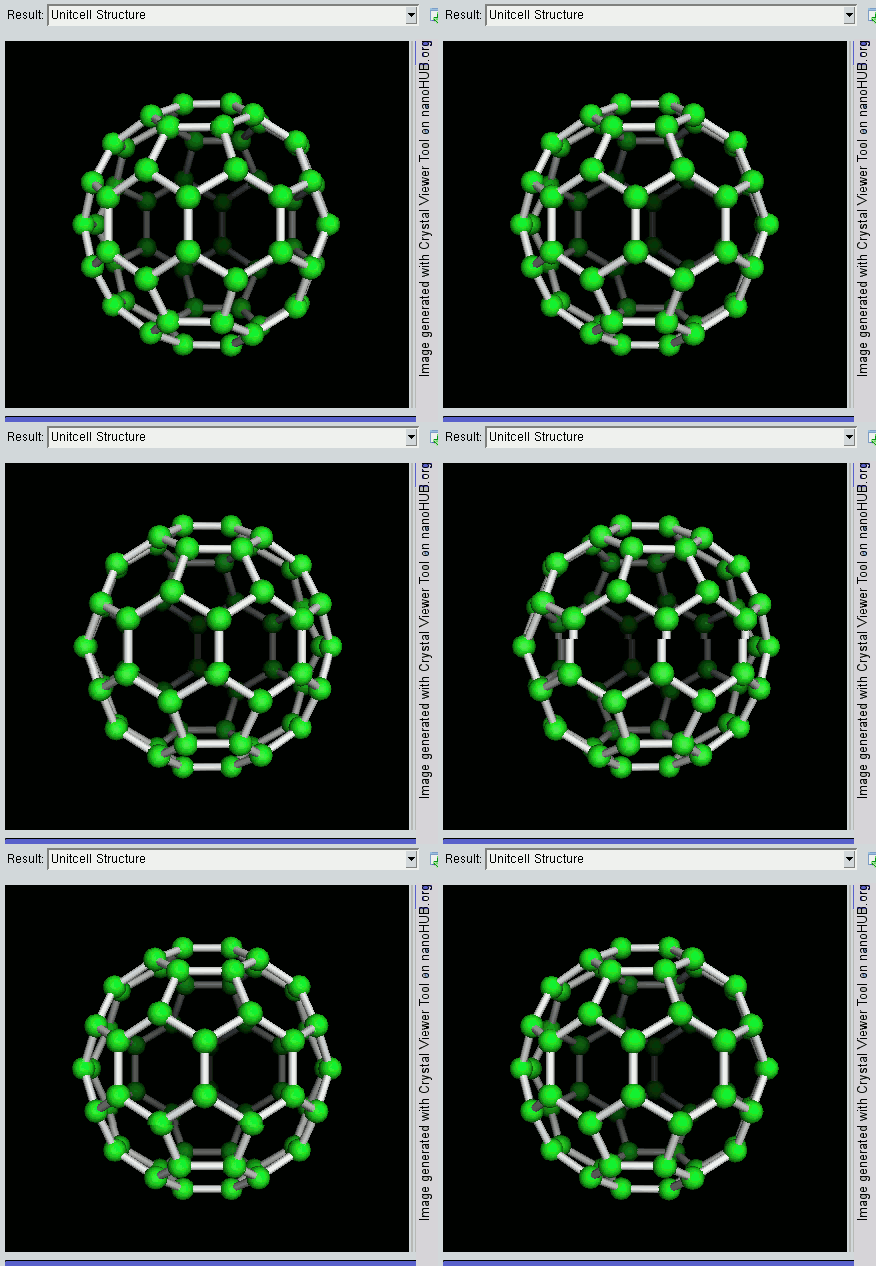
So far, we have become very good friends with two allotropes of carbon -- diamond and graphite. Allotropes are essentially elements in which the atoms have been arranged differently. As a recap, diamond and graphite are both made up of carbon atoms, but diamond adopts a tetrahedral lattice, but graphite has a layered structure. Let's meet another allotrope of carbon -- the buckyball.
The buckyball is made up of 60 carbon atoms, linked together in such a way to form a molecule that looks like a soccer ball. C60 was first discovered by a group of scientists from the Rice University in 1985. They named it buckminsterfullerene, after Richard Buckminster Fuller, an American architect who was one of the first to design buildings that resembled the buckyball (geodesic domes). The scientists, Sir Harry Kroto, Bob Curl and Rick Smalley won the Nobel Prize in Chemistry in 1996 for their discovery.
Discovering the buckyball opened up an exciting field of study, called nanotechnology, which involves the building up of new materials, atom-by-atom. The buckyball is really strong, heat resistant, and is a superconductor -- its electrical resistance drops to zero when its temperature drops beyond a certain critical temperature. Some cool uses of the buckyball include a sponge to mop up free radicals in the brains of stroke victims, a supercomputer the size of a paperback novel, and in photocopier toners to improve the resolution of our photocopies.
Recently, NASA astronomers used the Spitzer Space Telescope and discovered these molecules in space, in a planetary nebula named Tc 1. Planetary nebulas are the remains of stars, like the sun, that shed their outer layers of gas and dust as they age. The buckyball is the largest molecule to be discovered in space so far. This was done by analysing the infrared light given off by the planetary nebula. This is a branch of technology and science known as spectroscopy.
I think the most amazing thing about this discovery is that the telescopes that astronomers have developed to date are able to analyse substances in space down to the molecular level, don't you think?
Thursday, July 15, 2010
Molecular Cooking is Cooking: Molecular Gastronomy is a Scientific Activity
Have you heard of molecular gastronomy? Molecular gastronomy involves the application of scientific techniques into cooking. I tried some of this kind of food a few weeks back and I saw how the chef used liquid nitrogen to make meringue, and "fruit caviar" using compounds such as sodium alginate and calcium chloride.
This is a video of a lecture by a French Chemist, Herve This, given at Imperial College in London. Herve is a physical chemist (physical chemistry is essentially what we are learning now in JC1), whose main area of interest is molecular gastronomy. He is probably one of the leading chemists dealing with the art of culinary. It is a long video, but it is very entertaining to see him performing all sorts of procedures on egg white (or egg yellow, as he calls it) and explaining the Chemistry behind it. The french accent may be a little difficult to get used to, but I love how he constantly proclaims that "eet iz very eeazi".
Enjoy~
Tuesday, July 6, 2010
Cool stuff: The Ice-Calorimeter
From this week onwards, you will find yourself dealing with calorimeters during practicals, tutorials and lectures as we work through the topic of thermochemistry. You have handled the low-tech calorimeter made of styrofoam cups in the lab, and you have heard about a high-tech version called a bomb calorimeter. Have you wondered what the earliest calorimeters looked like and how they worked?
Here is a picture of the ice-calorimeter used by Antoine Lavoisier and Pierre-Simon Laplace to measure the enthalpy changes in 1785:
The chemists will place the reactants (the system) in the basket that you see in the middle of the calorimeter, and then pack ice (the surrounding) around the calorimeter. When the reactants react and produce heat, the ice around the calorimeter will melt. By measuring how much of the ice has melted, the chemists can then determine Q' and subsequently enthalpy change. However, as this deals with the melting of ice (change in state) instead of just an increase in temperature of water in the same state, the equations used to calculate Q' will be different. The Physics students should be able to figure this out.
Lavoisier and Laplace used this calorimeter to show that respiration (taking in oxygen to produce energy) is a form of slow combustion, or as Lavoisier put it "la respiration est donc une combustion". They achieved this by placing a guinea pig in the calorimeter and measuring the heat given out by the animal. The poor guinea pig.
The calorimeter in the photo is currently housed in the Science Museum in London. If you ever have a chance to go there, be sure to check it out. While at it, you can inform the other tourists of the fascinating Chemistry behind it.
Friday, July 2, 2010
Another new element!
In February this year, a new element, Copernicium was added to the periodic table. This element has a proton number of 112, and was at that time, the heaviest element to be officially added. Now, yet another element is on the verge of being included in this table -- element 114. So far, only two teams of scientists in Russia and America have been successful in producing this element, and in total 15 atoms (15 atoms, not 15 moles of atoms) of element 114 have been synthesised.
Element 114 is produced by combining calcium atoms and plutonium atoms. Each calcium atom has 20 protons, while each plutonium atom has 94 protons. When they fuse, they form a new atom with a total of 20 + 94 = 114 protons. Like Copernicium, atoms of element 114 are very radioactive and break down into smaller particles very quickly. On average, these atoms only existed for a few tenths of a second.
Now that the scientists are able to produce element 114, they have to discern the general chemical properties of this new element. To put it simply, they need to know whether they should classify element 114 as a metal or a noble gas. To do this, the scientists need to produce and capture these atoms, and test if they will adhere to a surface made of gold. If they do, element 114 is a metal. If they do not, element 114 is a noble gas as such atoms do not form any attractions with gold (Can you think of the reason why?).
Here is a video about this new element:
Monday, June 28, 2010
Helium: Up, up, and away~
As we go into the topic of ideal gases this week, we are going to encounter the noble gas, helium numerous times. So, why don't we find out more about this gas?
Helium should not be an unfamiliar gas. Everybody knows that is the gas that makes balloons float. Do you know what happens when you try to talk after inhaling helium? Check this video out if you have never tried it before:
Before everybody runs out to buy helium balloons to try sounding like Donald Duck, let me tell you a sobering news: the supply of helium on our planet is running out. We can expect to run out of helium entirely within the next six years. Apart from having a world without balloons that fly away when released, the depletion of helium is going to affect the scientific world in a very significant way. Helium is needed for analytical methods such as mass spectroscopy (to determine the types of elements making up a compound) and NMR spectroscopy (to determine the structure of an organic compound). Commercially, it is also used as a coolant in MRI scanners (used to produce scans of brains in hospitals), and to produce an inert and protective environment for welding.
The helium we have on earth now is formed from the excruciatingly slow decay of radioactive element, uranium. This means that the nucleus of uranium breaks up into smaller nuclei, and in the process, giving out an atom of helium. Decay of the uranium nucleus requires a lot of energy, and takes thousands of years to occur. Even after it is produced, much of it escapes into space of the upper atmosphere, which makes it impossible for us to capture. A scientist said that the supply of helium we are utilising now "has been made over the approximate 4.5 billion of years the Earth has been around". With no fast processes to replenish all the helium mankind has been using, it is no wonder that we will run out of this noble gas.
Some people may ask, can't we artificially create more helium? Well, no. It will require an insanely high amount of energy to imitate how Nature synthesizes helium -- it takes thousands and thousands of years to form helium, even with all the crazily high pressure and temperature in the Earth's mantle. So, we just have to live with the fact that this gas is, for now, non-renewable.
The next time you play with a helium balloon, cherish it. Who knows, maybe your children will never ever get a chance to experience the joys of a balloon that flies away when not held on to tightly.
Sunday, June 27, 2010
Okay, I admit. I have not watched this movie, and neither did I know who this Iron Man is until I heard about the character when watching this wonderful drama series "The Big Bang Theory". But since EVERYBODY is talking about it, I decided to check out what EVERYBODY was saying about it online. And look! I found this very interesting article discussing the Chemistry behind Tony Stark's miraculous synthesis of a new element to cure his palladium poisoning.
Read the full article from New Scientist here.
And while you're at it, why not check out real parallels to the fantastical technology displayed in the first Iron Man movie here.
Saturday, June 26, 2010
Have you heard of the Great Pacific Garbage Patch? It is a whole collection of marine litter made up of plastics, chemical sludge and other debris in the Pacific Ocean.
And don't think that this is as bad as it can get: There is also a similar garbage patch in the Atlantic Ocean.
For more information about the astounding pollution caused by Man, read the following articles:
Why is the World's Biggest Landfill in the Pacific Ocean?"Healthier" salt for potato chips?
We have just learnt in Chemical Bonding that sodium chloride comes in the form of a giant ionic lattice, with the sodium and chloride ions regularly arranged in stacked layers.

Sodium chloride adopts the face-centred cubic system, with each sodium ion being surrounded by 6 chloride ions in an octahedral manner.
In an effort to make potato chips healthier, scientists are trying to increase the surface area of the sodium chloride crystals so that they will dissolve more completely on our tongues. This will allow the manufacturers to put less salt in our potato chips, but still maintain the ideal level of saltiness that we love in our chips.
In such crystals, the ions can be arranged in different ways, the most common arrangements being the simple cubic, body-centred cubic, and face-centred cubic.
The company that makes Lay's potato chips, Pepsico is looking at changing the crystal lattice of sodium chloride so as to make the salt that they use for their potato chips healthier. It has been found that while sodium chloride, as we know it, is very soluble in water, only 20% of the crystals on the chips dissolve in our mouths when we eat them. This means that most of the salt we are ingesting does not contribute to the saltiness of the food, but has the undesirable effect of increasing our sodium intake. It has been found that high sodium intakes lead to many health problems, such as high blood pressure.
In an effort to make potato chips healthier, scientists are trying to increase the surface area of the sodium chloride crystals so that they will dissolve more completely on our tongues. This will allow the manufacturers to put less salt in our potato chips, but still maintain the ideal level of saltiness that we love in our chips.
To read the original article on this from Popular Science, click here: http://www.popsci.com/technology/article/2010-04/frito-lay-changes-shape-salt
New Element: Copernicium
A new element has been added to the Periodic Table!
That box that says Uub (ununbium) which has an atomic number of 112? It now has a proper name: Copernicium.
This element was first discovered in 1996 by a group of of German scientists. They made the element by combining zianc ions with lead . The element produced is radioactive, and is extremely short-lived. However, IUPAC took 13 years to recognise this claim and officially acknowledged the element and the German scientists who discovered the element.
Naming this element proved to be a hassle too. Trivia: it is a rule that elements in the Periodic Table cannot be named after a living person. So, the scientists decided to name it after Copernicus, the first astronomer to propose that the Earth is not in the centre of the universe, and it orbits around the sun.
Upon naming the element, the scientists had to propose a symbol for this new element. They wanted to use the symbol Cp, but it was rejected because Cp was already used to represent cyclopentadiene. On top of that, Cp is commonly used to denote heat capacity. After all the trouble, it was finally decided on February 19, 2010 that this new element is named Copernicium, with the symbol Cn.
Subscribe to:
Posts (Atom)